Dr Ashraf Dower
Sydney neurosurgeon & Specialist Spine Surgeon
Delivering minimally invasive and advanced surgical solutions with a focus on safety, recovery, and quality of life.
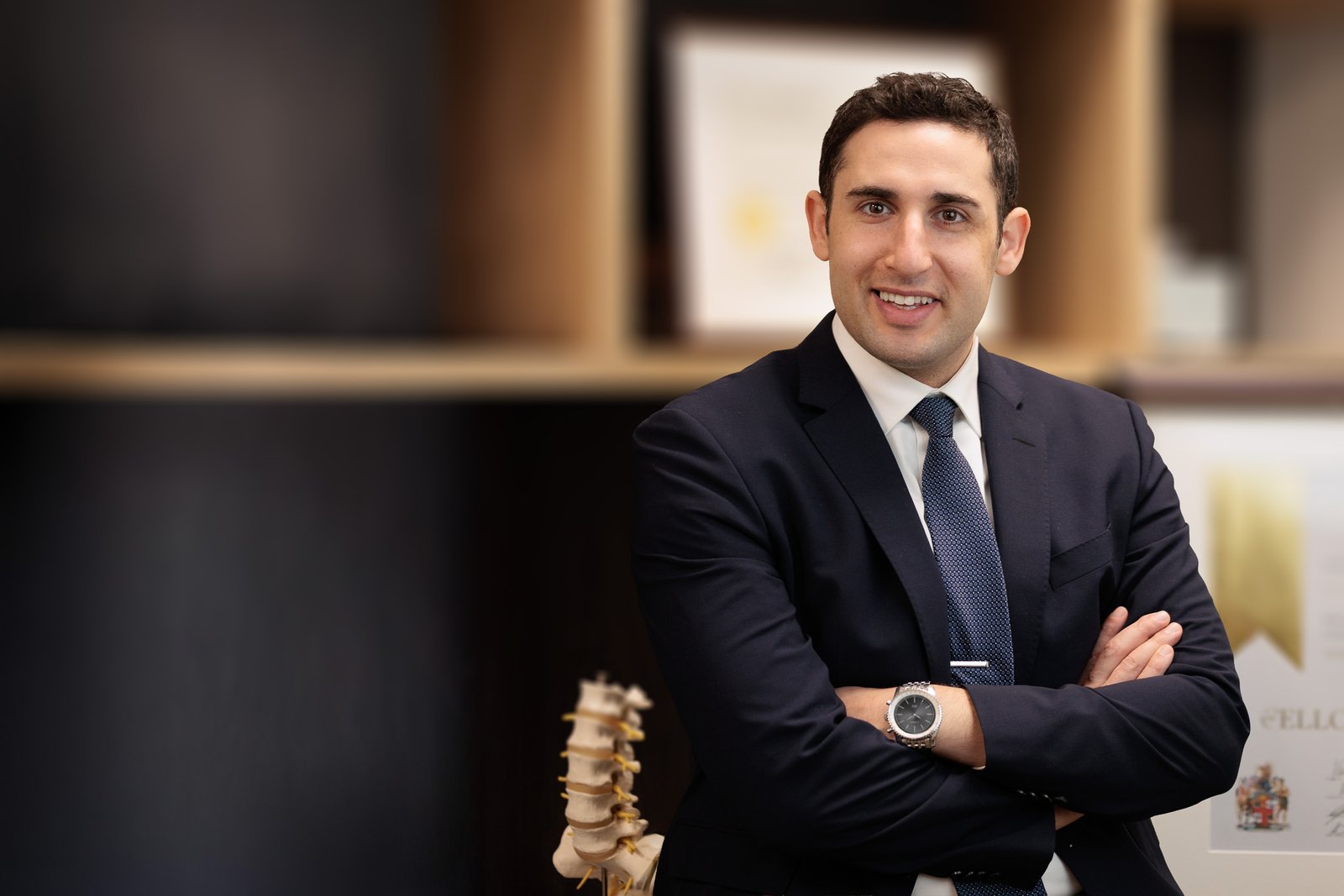
Trusted Sydney neurosurgeon in adult brain and spine care
Dr Ashraf Dower is a fellowship trained Australian neurosurgeon with subspecialty expertise in complex spine surgery, including endoscopic and minimally invasive techniques. He provides personalised, evidence-based treatments for patients experiencing a wide range of cranial and spinal issues with an emphasis on functional recovery and long-term outcomes.
He consults in Penrith, Westmead and North Sydney, and operates at leading private and public hospitals across Sydney, including The Mater Hospital, Westmead Private, and Nepean Public and Private Hospitals.
For Patients
A valid GP or specialist referral is required to see Dr Dower.
Find out more about booking or attending your appointment, and other common concerns.
For Referrers
Dr Dower accepts urgent and routine referrals for the full spectrum of cranial and spinal conditions.
Find more information for referrers here.
Conditions Treated
Brain tumours
Conditions:
- Astrocytoma
- Choroid plexus papilloma
- Colloid cyst
- Ependymoma
- Glioblastoma
- Glioma
- Haemangioblastoma
- Meningioma
- Metastases (secondary brain tumours)
- Oligodendroglioma
- Pituitary tumours
- Skull tumours
Treatments:
- Biopsy (open and stereotactic needle biopsy)
- Craniectomy and cranioplasty for skull tumours
- Craniotomy and tumour debulking/resection
- Endoscopic endonasal transsphenoidal pituitary tumour debulking
Spine tumours
Conditions:
- Chordoma
- Intradural extramedullary tumours (e.g., meningioma, schwannoma, neurofibroma)
- Intramedullary tumours (e.g., ependymoma, astrocytoma)
- Metastases (secondary spinal tumours)
Treatments:
- Decompression and fusion
- Resection
- Separation surgery
- Stabilisation surgery
- Vertebrectomy (corpectomy)
Brain trauma
Conditions:
- Acute and chronic subdural haematoma
- Depressed skull fractures
- Extradural (epidural) haematoma
- Intracerebral haematoma
Treatments:
- Craniectomy
- Cranioplasty
- Evacuation of intracranial haematoma
Spine trauma
Conditions:
- Fractures (e.g. burst, compression, chance)
- Fracture dislocations
Treatments:
- Fusion
- Laminectomy
- Surgical stabilisation and fixation
- Vertebroplasty
Cervical spine conditions
Conditions:
- Cervical disc disease, prolapse, herniation
- Cervical radiculopathy
- Myelopathy
- Ossification of the posterior longitudinal ligament (OPLL)
- Radiculopathy
- Spondylosis
- Uncovertebral joint hypertrophy
Treatments:
- Anterior cervical discectomy and fusion (ACDF)
- Foraminotomy
- Laminectomy
- Laminoplasty
- Lateral mass fusion
- Total disc replacement
- Vertebrectomy (corpectomy)
Thoracic spine conditions
Conditions:
- Disc herniation
- Radiculopathy
- Myelopathy
- Thoracic deformities (scoliosis, kyphosis)
Treatments:
- Decompression and discectomy
- Fusion and deformity correction
- Vertebrectomy (corpectomy)
Lumbar spine conditions
Conditions:
- Disc herniation
- Neurogenic claudication
- Radiculopathy (sciatica)
- Spinal stenosis
- Spondylolisthesis (degenerative and isthmic/pars defects)
Treatments:
- Foraminotomy
- Lumbar fusion
- Anterior lumbar interbody fusion (ALIF)
- Lateral lumbar interbody fusion (ATP, XLIF)
- Posterior lumbar interbody fusion (PLIF)
- Transforaminal lumbar interbody fusion (TLIF)
- Microdiscectomy
- Minimally invasive and endoscopic decompression
- Pedicle subtraction osteotomy
- Laminectomy
- Vertebrectomy (corpectomy)
Other neurosurgical conditions
Conditions:
- Arachnoid cyst
- Cavernoma (cavernous malformation)
- Carpal tunnel syndrome
- Chiari malformation
- Encephalocoele
- Peripheral nerve entrapment
- Peripheral nerve tumours
Treatments:
- Carpal tunnel and cubital tunnel nerve decompression/release
- Posterior fossa / foramen magnum decompression
Special Interests
Endoscopic spine surgery
Minimally invasive technique using a camera and fine instruments to treat disc and spinal canal pathology, reducing pain, preserving spinal stability and promoting faster recovery.

Minimally invasive spinal fusions
Spinal fusion performed through small incisions with specialised instruments to stabilise the spine while minimising muscle and tissue trauma.

Robotic-assisted spine surgery
Precision-guided spinal surgery using robotic technology to improve accuracy of implant placement and reduce surgical risk.

Enhanced recovery after spine surgery
Enhanced Recovery After Surgery (ERAS) for the spine is a modern, multidisciplinary and evidence-based program that optimises care before, during and after surgery to accelerate functional recovery, shorten hospital stays and reduce complications.

Affiliations